
The State of DLT Report 2026
Distributed ledger technology (DLT) is becoming a strategic asset in financial services. Over half of surveyed professionals now recognise its value in areas such as tokenisation, smart contracts, and regulatory compliance. Organisations with practical DLT experience express greater confidence and note measurable benefits. Use these insights to guide your approach to DLT and drive operational excellence.
Espeo Software appoints Wojciech Biedziński as Delivery Director

Wojciech Biedziński, Delivery Director, and Przemysław Koper, CEO of Espeo Software, standing together during the announcement of Wojciech’s new role.
Digital trade standards and APIs: how to build interoperability

Which standards matter for digital trade documents and how to select platforms that interoperate, support eBL workflows, and scale beyond pilots.
UK electronic trade documents law: what changed and what it enables
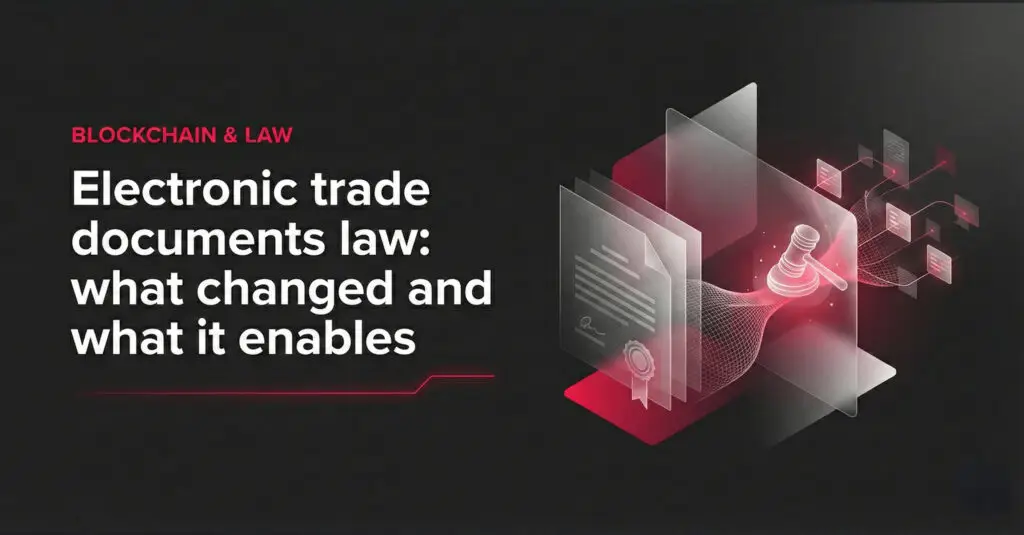
For decades, international trade has relied on physical documents – bills of lading, bills of exchange, promissory notes – as proof of ownership, authorization to move goods, and instruments for securing finance. These paper-based systems work, but they create friction: documents must be physically transported, couriers add cost and delay, and exceptions to proof-of-possession rules […]