The United States is moving closer to one of the most important regulatory shifts the crypto market has seen in years. The proposed CLARITY Act aims to define how digital assets should be classified, regulated, and supervised — especially when it comes to the long-standing uncertainty between securities and commodities.
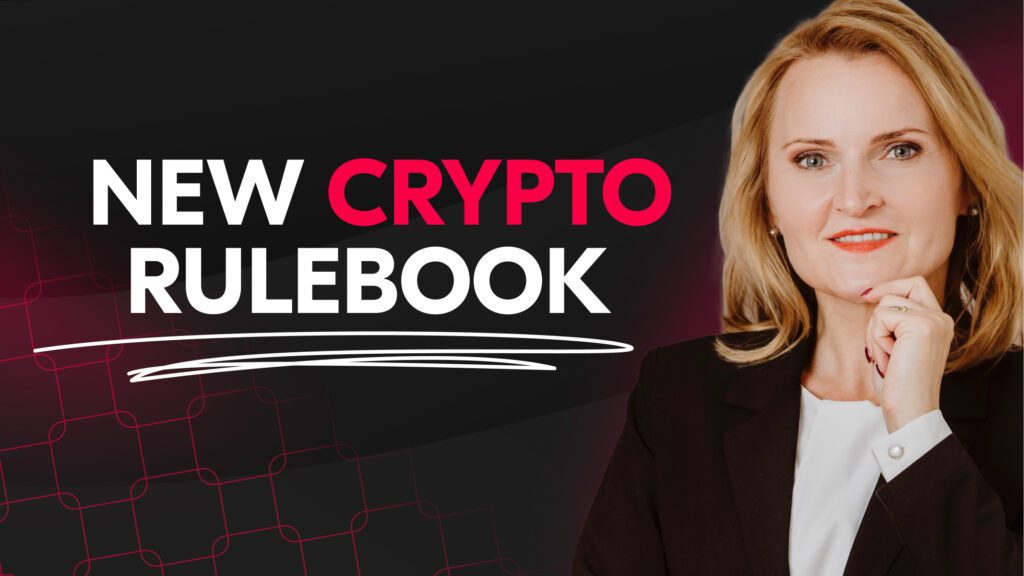
To unpack what this could mean for crypto businesses, exchanges, investors, and regulators, we sat down with Kasia Lasota-Heller, founder and managing partner of LEXCELLENCE AG law firm in Switzerland and coach of the regulatory working group at Crypto Association.

Dr Katharina Lasota Heller, LLM is a leading legal expert in blockchain and digital assets, Managing Partner at Lexcellence Legal Services Co., Co-Chair of the Crypto Wallet Association, President of the Board of Directors at the Swiss Blockchain Association, and a lecturer at the Kozminsky University in Warsaw.
In this conversation, Kasia explains why the industry has struggled with inconsistent regulation for years, how the CLARITY Act changes the landscape, and why greater legal certainty could become a turning point for digital assets in the U.S.
We have already had PhD Katharina a conversation about the Genius Act. Plea
Why the CLARITY Act Matters
For years, crypto companies operating in the U.S. have faced a difficult question:
Is a token a security or not?
The answer has often depended less on clear legislation and more on court interpretations and enforcement actions.
As Katharina explains:
“The issue is that we sometimes don’t know what they are. So the CLARITY Act aims to clarify the situation of tokens which are not securities or may have been securities at the beginning.” — Kasia Lasota-Heller
Today, many digital assets operate in a grey area. Some tokens may resemble investment products, while others function primarily within blockchain ecosystems as utility or payment instruments.
The CLARITY Act attempts to create a legal framework that distinguishes these categories more clearly.
From Enforcement to Defined Rules
One of the biggest criticisms of the current U.S. regulatory approach is that many crypto companies feel they are being regulated through enforcement rather than through transparent legislation.
Kasia describes the current situation bluntly:
“What is happening now in the U.S. and also very similar in Switzerland, we have legislation or regulations by enforcement.” — Kasia Lasota-Heller
This creates uncertainty for:
- Token issuers
- Crypto exchanges
- Investors
- Trading platforms
- Institutional players entering the market
Under the proposed framework, companies would finally receive clearer guidance on:
- Whether a token qualifies as a security
- Which regulator has authority over it
- What licensing or compliance obligations apply
- How exchanges can legally list and trade digital assets
The goal is not simply new regulation — it is predictable regulation.
Digital Commodities vs Digital Securities
At the heart of the CLARITY Act is the introduction of a new category: digital commodities.
According to Kasia:
“The ultimate goal is to have something what we call digital commodity.” — Katharina Lasota-Heller
This distinction is critical.
Digital securities
These remain under the authority of the SEC (Securities and Exchange Commission).
They include tokens that function similarly to:
- Shares
- Bonds
- Derivatives
- Investment contracts
Digital commodities
These would fall under the oversight of the CFTC (Commodity Futures Trading Commission).
This category would likely include assets such as:
- Bitcoin
- Certain utility tokens
- Some blockchain-native assets used within decentralized networks
As Kasia summarizes:
“We will have two authorities regulating two different areas.” — Kasia Lasota-Heller
For the market, this could significantly reduce ambiguity around compliance and operational risk.
Why Ripple Became the Perfect Example
The Ripple case became one of the strongest examples of why the crypto industry has demanded clearer legislation.
Different courts reached conflicting conclusions about whether XRP should be treated as a security.
Kasia points directly to this inconsistency:
“The court, even the same court, might decide in two opposite directions.” — Katharina Lasota-Heller
This inconsistency creates enormous challenges for businesses trying to operate legally.
Without a unified framework:
- Exchanges face uncertainty around listings
- Investors struggle to assess legal risk
- Startups hesitate to launch products in the U.S.
- Innovation can move to jurisdictions with clearer regulations
The CLARITY Act is designed to reduce exactly this type of legal fragmentation.
Will the CLARITY Act Solve Everything?
Probably not.
Even with clearer definitions, some edge cases will remain difficult.
Kasia points to the example of Digital Commodity Pools — structures where funds invest collectively in digital assets such as Bitcoin, Ether, or Solana.
These cases may still raise questions around:
- Spot trading
- Investment structures
- Derivatives exposure
- Regulatory overlap between agencies
As she explains:
“It won’t be that easy, but it will be more clear, at least a bit.” — Kasia Lasota-Heller
The reality is that crypto regulation evolves alongside technology. No single law can eliminate every ambiguity immediately.
Still, introducing a clearer framework could create a much more stable environment for businesses operating in digital finance.
The Banking Question: Yield and Crypto Finance
Another major issue discussed during the interview is the relationship between crypto yield products and traditional banking regulations.
In crypto finance, platforms often offer returns on deposited digital assets — mechanisms that can resemble interest-bearing banking products.
Kasia highlights why this creates tension with traditional financial institutions:
“When we giving somebody our tokens for custody or holding them, and the provider promise us to pay us something back, it’s very similar to the mechanism of interest.” — Kasia Lasota–Heller
Banks operate under strict:
- Liquidity requirements
- Capital reserve obligations
- Licensing frameworks
- Consumer protection standards
If crypto companies offer similar financial products without equivalent obligations, regulators naturally begin asking difficult questions.
This is why yield products continue to attract close scrutiny worldwide.
Why Legal Clarity Could Accelerate Adoption
The broader significance of the CLARITY Act extends beyond compliance.
Clearer regulation could:
- Encourage institutional participation
- Reduce legal uncertainty for startups
- Improve investor confidence
- Support responsible innovation
- Help the U.S. remain competitive globally
Kasia ultimately views the move toward clarity as positive:
“To have more quality or clarity on the market is always a good decision.” — Katharina Lasota-Heller
That may be the most important takeaway from the entire discussion.
The industry does not necessarily need lighter regulation.
It needs understandable regulation.
Final Thoughts
The CLARITY Act may become one of the defining regulatory developments for the next phase of crypto adoption in the United States.
While many implementation details still need to be finalized, the proposal signals a shift away from reactive enforcement and toward a more structured regulatory framework.
For crypto companies, exchanges, fintech startups, and investors, this could mark the beginning of a more predictable operating environment.
And while uncertainty will never disappear entirely in an industry evolving this quickly, clearer rules may finally give businesses the confidence to innovate at scale.
Watch the whole interview with Katharina here:
About Katharina Lasota-Heller
Katharina Lasota-Heller is the founder and managing partner of Lexalons law firm in Zug, Switzerland, specializing in commercial law, banking law, capital markets, and crypto finance. She is also active in global crypto regulatory initiatives and teaches at universities focused on modern financial regulation and blockchain technologies.
Want to discuss blockchain, crypto regulation, or fintech product development?
At Espeo Software, we work with fintech and blockchain companies building secure, scalable digital products for regulated markets.
Get in touch with our team to talk about your next fintech or blockchain project.